Thanks to the folks who attended my talk at Quest 2013! I appreciated the interaction, and I hope you found the talk useful.
You can find my slides, and the mind map, here on SpeakerDeck.
Thanks to the folks who attended my talk at Quest 2013! I appreciated the interaction, and I hope you found the talk useful.
You can find my slides, and the mind map, here on SpeakerDeck.
I just got news today that Microsoft has changed my Most Valuable Professional award from C# to Application Lifecycle Management (ALM). This is great news for me because this is much more in my wheelhouse both technically and passion-wise. Moving to ALM means I’ll be much more inline with things I work on regularly and care intensely about: testing, process, and making teams awesome.
I’m also very excited because I get to hang out with a bunch of awesome ALM geniuses like Esteban Garcia, Ryan Cromwell, and others. This is going to be awesome!
Oh, you thought my last post meant I wasn’t an MVP at all anymore? Oh, terribly sorry for that, but I figure there had to be something evil I could do on April Fool’s Day…
Yes, I realize it’s April Fools Day; however, this isn’t a joke. After a wonderful string of years, I got notification from Microsoft that I’m no longer an MVP for Visual C#. Frankly, I’d figured this was coming some time ago and I’m surprised it took this long.
Why? Because I don’t code for a living, and I don’t focus on C#. I don’t know anything about C# 4.0, contravariance, or covariance. Ask me to write a lambda, or explain how it differs from a delegate, and you’ll likely see my head explode or me head for the nearest bottle of scotch. I was put into the C# category in 2005 because they didn’t have a better spot to put me for all the community work that I was being recognized for, and it’s always been awkward for me.
My award wasn’t so much due to specific things I’ve done as it was due to all the awesome folks in the community, and I want to make sure to thank all the wonderful people who made the last seven or eight years great. Well, I can’t thank all y’all by name, but I hope you get the idea…
My time as a C# MVP has been awesome. I’ve gotten some wonderful opportunities, and I’ve met some amazing folks.
And by the way, no, I’m not going to go on an anti-MVP rant about how the program leeches off everyone and makes MVPs lose their morals and self-worth. The MVP program is what individuals make of it. I got a tremendous amount out of it, and again, thanks to everyone for their support over the years.
Nor am I going to give up .NET and go to Ruby. Duh.
Despite this news I’m sure cool things will come along, so please don’t get your undies in a wad over my case. I’m good with it. It’s been a great experience.
It’s true. I’ve been asked to give up my dream job that I’ve loved working for the last 20 or so months.
Instead, I’m now the Director of Engineering for Test Studio and am going to help with delivery of the automation tool I love so much.
Yes, I know. That was a bad trick to play. You’ve been reading my blog and haven’t figured this part of my “humor” yet?
In the new role I’ll be working closely with the teams in Austin and Sofia on planning and execution for future releases. It’s a scary but wonderfully exciting opportunity, and truth be told I had been missing being part of actively building software.
I’m not vanishing from the testing community—that involvement is a critical part of better understanding problems that we can help solve with Test Studio—but the amount and shape of my involvement will change as I move my focus to the teams at Test Studio.
One thing this brings up in a big way: Telerik needs another Evangelist to fill my position. We’re already looking for one, so this means we’ve got a second slot to fill, too!
Want to know more? Have a look at the job description and drop me a line to chat me up!
I try to keep the virtual machines I use for development, demos, and testing fairly lean. I use a smallish C: partition (60GB or so) and force everything to install to a second D: drive. All my projects and data end up on D:. This has saved me several times in the past when I’ve needed to rebuild a crashed VM—just reinstall the OS and off you go. I also like to think that it helps performance, even on a VM, by keeping IO off the operating system drive. No, I’ve never bothered to actually measure performance for this. Why do you ask?
Today I ran into a rather interesting set of problems when trying to run code coverage metrics in Visual Studio 2012. Of course my tester homies all this this is epically funny and cool.
A quick bit of troubleshooting found the following, uh, minor problem:
WinDirStat is the next tool to jump on, and it quickly shows where the problem lies. The winsxs folder, where backup copies of every DLL dating back to Windows 3.01 are stored. OK, so it’s not quite that bad, but every time anything’s impacted by Windows Update or a Service Pack then cruft gets thrown in there.
Disk Cleanup is a handy utility to clean out unneeded backups of these, plus lots of other goo; however, it’s not installed by default on a Windows 2008 server OS. You’ll need to go add the Desktop Experience Feature (Server Manager | Features | Add Feature | Desktop Experience), then Disk Cleanup will be available under Start | Accessories | System Tools.
I ran Disk Cleanup and got back a huge chunk of disk real estate – Disk Cleanup also let me know I had an extraordinary amount of temp file usage, too. And here I thought I’d been doing better regular maintenance on my server…
Next maybe I should go check the last time I changed the oil in the car.
(PS: Turns out this didn’t fix the epic crashes, but it was still needed. Hopefully it’s useful to you.)
Update: I totally forgot to give mad props to colleague and good pal Phil Japikse for walking me through a couple things over IM in the course if noodling all this out.
I’ve given my Unit Testing 101 talk ten or 20 times over the last four or five years and I love it. I enjoy getting folks introduced to unit testing without having to deal with dogma issues around Test Driven Development, Test Occasionally Development, etc.
Part of the talk hits up working with mocking in order to get past a dependency on external providers. The example I use is a security provider used to check whether or not the current user’s authorized to update info for an employee.
In the past I’ve used Rhino.Mocks to work through this. I’ve used Rhino in a few projects over the years and it’s been a great tool for me.
Being the rather dense guy I am, I forgot that the awesome company I work for has its own mocking tool: JustMock. I figured it made sense to alter my tests to work with JustMock, if for no other reason than I could speak halfway intelligently to questions on it from other folks I interact with in the community.
One of the things I was most interested in was dealing with badly handled dependencies in code. The example I used previously had a nice constructor-injected interface-based security provider, so it was easy and clean to handle with Rhino. Here’s how it looks:
public class EmployeeUpdater
{
private readonly IUpdateEmployeePermissible _updateEmployeeSecurityProvider;
public EmployeeUpdater(
IUpdateEmployeePermissible updateEmployeeSecurityProvider)
{
_updateEmployeeSecurityProvider = updateEmployeeSecurityProvider;
}
public Employee UpdateEmployeeRate(Employee targetEmployee, float newRate)
{
Employee updatedEmployee;
if (_updateEmployeeSecurityProvider.
CanUpdateEmployeeRate(targetEmployee.EmployeeId))
//if (true)
{
updatedEmployee = new Employee(
targetEmployee.EmployeeId,
targetEmployee.FirstName,
targetEmployee.LastName,
targetEmployee.Address, newRate);
}
else
{
throw new SecurityException(
"Invoking user doesn't have permissions to update target target employee. " +
targetEmployee);
}
return updatedEmployee;
}
}
A test using Rhino, complete with interaction verification, is straightforward:
[Test]
public void Verify_security_provider_is_called()
{
int userId = 1;
int oldRate = 5;
int newRate = 10;
var mockProvider = MockRepository.GenerateMock<IUpdateEmployeePermissible>();
mockProvider.Expect(x => x.CanUpdateEmployeeRate(userId)).Return(true);
Employee current = new Employee(userId, "Jim", "Holmes", "Doghouse", oldRate);
EmployeeUpdater updater = new EmployeeUpdater(mockProvider);
Employee updated = updater.UpdateEmployeeRate(current, newRate);
mockProvider.VerifyAllExpectations();
}
I took and muddied up the EmployeeUpdater a bit to mimic code we’ve either written ourselves or have seen: “new”ing up objects instead of injecting them, and using calls to static methods or classes. These situations make it tough to mock things out and will force you to move to a commercial mocking tool like TypeMock or JustMock. [1] (JustMock has an extremely powerful free version, but mocking concrete classes, “future mocks” of items “new”ed up instead of injected, or static requires the commercial version.)
Here’s my uglified EmployeeUpdater class. I simply created two different methods, one which newed up the security provider in it, another which hit the provider via a static call.
public class EmployeeUpdaterLegacyStyle
{
public Employee UpdateEmployeeRate_ProviderNewedUpHere(Employee targetEmployee, float newRate)
{
UpdateEmployeeSecurityProvider _updateEmployeeSecurityProvider =
new UpdateEmployeeSecurityProvider();
Employee updatedEmployee;
if (_updateEmployeeSecurityProvider.
CanUpdateEmployeeRate(targetEmployee.EmployeeId))
//if (true)
{
updatedEmployee = new Employee(targetEmployee.EmployeeId,
targetEmployee.FirstName,
targetEmployee.LastName,
targetEmployee.Address, newRate);
}
else
{
throw new SecurityException(
"Invoking user doesn't have permissions to update target target employee. " +
targetEmployee);
}
return updatedEmployee;
}
public Employee UpdateEmployeeRate_ProviderIsStaticHere(Employee targetEmployee, float newRate)
{
Employee updatedEmployee;
if (UpdateEmployeeSecurityProvider_Static.CanUpdateEmployeeRate(targetEmployee.EmployeeId))
//if (true)
{
updatedEmployee = new Employee(targetEmployee.EmployeeId,
targetEmployee.FirstName,
targetEmployee.LastName,
targetEmployee.Address, newRate);
}
else
{
throw new SecurityException(
"Invoking user doesn't have permissions to update target target employee. " +
targetEmployee);
}
return updatedEmployee;
}
}
JustMock handles both quite nicely. First, working with “future” mocking to handle the variant that instantiates the object in the method. Note I’m working with a concrete class. No interfaces, no virtual, just a straight concrete class that’s instantiated right in my method above. The final mockedProvider.Assert() validates the security provider’s method was indeed called by the updater. (Comment out the //if(true) portion in the updater to see that test fail!)
public void Mocking_provider_newed_in_method()
{
int userId = 1;
int oldRate = 5;
int newRate = 10;
var mockedProvider =
Mock.Create<UpdateEmployeeSecurityProvider>();
//Standard syntax for mocking
//Mock.Arrange(() =>
// mockedProvider.CanUpdateEmployeeRate(userId))
// .IgnoreInstance()
// .Returns(true)
// .Occurs(1);
//using the fluent interface from JustMock.Helpers
mockedProvider.Arrange(x => x.CanUpdateEmployeeRate(userId))
.IgnoreInstance()
.Returns(true)
.Occurs(1);
Employee current =
new Employee(userId, "Jim", "Holmes", "Doghouse", oldRate);
EmployeeUpdaterLegacyStyle legacyUpdater =
new EmployeeUpdaterLegacyStyle();
Employee updated =
legacyUpdater.UpdateEmployeeRate_ProviderNewedUpHere(current, newRate);
Assert.AreEqual(updated.HourlyRate, newRate);
//Standard assert
Mock.Assert(mockedProvider);
//Fluent from Helpers
mockedProvider.Assert();
}
Here’s a test handling the static call variant above:
[Test]
public void Mocking_provider_called_statically()
{
int userId = 1;
int oldRate = 5;
int newRate = 10;
Mock.SetupStatic(typeof(UpdateEmployeeSecurityProvider_Static),
StaticConstructor.Mocked);
bool called = false;
Mock.Arrange(() =>
UpdateEmployeeSecurityProvider_Static.CanUpdateEmployeeRate(userId))
.Returns(true)
.Occurs(1);
Employee current =
new Employee(userId, "Jim", "Holmes", "Doghouse", oldRate);
EmployeeUpdaterLegacyStyle legacyUpdater =
new EmployeeUpdaterLegacyStyle();
Employee updated =
legacyUpdater.UpdateEmployeeRate_ProviderIsStaticHere(current, newRate);
Assert.AreEqual(updated.HourlyRate, newRate);
Mock.Assert(() =>
UpdateEmployeeSecurityProvider_Static.CanUpdateEmployeeRate(userId),
Occurs.Exactly(1));
}
I’m sure there are better ways to leverage JustMock, and I’m sure there are cleaner ways to write the test. This exercise was more about me learning what capabilities JustMock has so I could keep it somewhat clear in my own head.
I’d love to hear feedback from folks who’ve worked with both mocking tools! Have you worked with Rhino.Mocks and JustMock? Have any thoughts?
[1]Perhaps Rhino.Mocks now handles these situations. I fully admit I haven’t kept up with it…
UPDATED
Interested in more detail on how we plan CodeMash? Want to see all the gory (and scary!) financial figures behind the scenes?
We’ve posted up the exact Excel sheet I use to plan everything financial around CodeMash. If you’re a conference organizer, or considering organizing one, then this sheet may be of great use to you. Yes, it’s tailored to CodeMash, but it’s full of information that may be very useful to you. There are a number of things it helps me with every year:
The workbook isn’t perfect. I refactor it every year based on things I’ve learned (usually the hard way). Just this year I finally deleted out columns I’d had hidden which contained revenue and estimated expenses for attendee headcounts of 250, 400, 500, and 700. It’s been a few years since we were that small…
Still, it’s invaluable for me in planning. It may be of interest to you, and it follows CodeMash’s policy of being as transparent as possible around our finances.
Grab it here! I hope you find it useful and informative!
UPDATE: I didn’t make clear that this workbook is not finalized for 2013. Consumables (soda, coffee, cocktails and beer) always are a huge variable, and there are always a bunch of last minute charges/changes. That $31K surplus will be nowhere near that by the time things are said and done.
I’ve returned this last Wednesday from 12 days in India and I thought I’d post a few musings on the trip here. (I’ve already posted up some of the work-related things over at my “day job” blog.)
Without a doubt this was one of the most impactful overseas trips I’ve ever had, and I’ve been to a fair number of places outside North America over my life: Okinawa, France, Saudi Arabia, Panama, the Philippines, St. Martin, England, Italy, Hungary, Austria, Poland, Bulgaria, and a likely a few others I’m forgetting.
I did zero preparation for the trip. None. Normally my wife and I are huge planners. We get all kinds of research done for big trips and have lots of things lined up. This time I figured I’d just go over and jump in the deep end and float wherever currents took me. Good choice.
First some of the bad things: India is a country where 300 million people live below poverty, and in India, unlike the US, poverty means poverty. People sleeping on blankets in the dirt with a torn tarp over their head poverty. 20 story five star hotels with tent cities next to them poverty. Hideous water giving you instantaneous dysentery and hepatitis poverty. It’s staggering if you’ve been in similar situations before, mind-numbingly shocking if you haven’t. The piles of trash across the entire country are sad—India is a land of amazing beauty and deep, deep spirituality. It was heartbreaking to see such a wonderful place being used as a dumping ground.
But still…
You get past that, or at least find yourself able to move beyond it, and wow, what India has to show you! Noise, color, smells, sounds, noise, people, food. The list goes on and on and on.
Food in India is a wonderful experience. India, like Italy, Spain, and Mexico, isn’t one style of cuisine. How could it be? Like those other nations India comes from a very diverse, fragmented history. The food in the south was greatly different from that of the north, and all of it was great. I was lucky to have friends to explain some of the differences to me. As you’ve likely noticed if you’ve followed this blog for long, I’m a pretty serious foodie, so when I run across stuff like this in the street I’m in love!

Or when my colleague takes me to a spot like this for dinner on the trip back from Agra:

This was a dinner from a central region of India which wasn’t typical of Bangalore, but my pal DJ thought I’d enjoy it. How right he was!
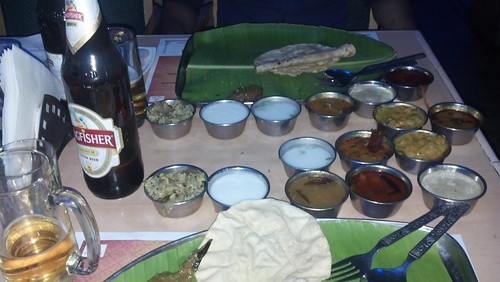
Here’s a milk drink we had at a diner-like place in Delhi.

My stomach was in fairly good shape the entire trip, but then I eat a lot of spicy food already so my stomach was somewhat preconditioned. It was pretty amusing how so many of my colleagues and fellow diners there would continually ask “Is this too spicy for you? Are you OK with this?” I suppose I’m a bit atypical in this area, though… (That said, the street food at the cart above did do me in a bit. I knew better, but didn’t care.)
The people are perhaps the happiest, most open, most hospitable I’ve ever come across in any of my travels. Bavarians previously held that spot, but my experiences in India blew even that away. Indians are gracious and full of laughter. I was honored to be invited into two different homes for meals, and they were some of the best times I had. (Being invited into someone’s home for food has a special significance for me, one I’m not able to explain well. Suffice it to say it means a lot.)
Indians are incredibly communal people. You might be taken aback at the depth conversations go between complete strangers. During our 16 hour day trip to Agra, my bachelor colleague got a grilling on his bachelorhood status, advice on why he should marry, and insight on a successful life—all from the middle-aged driver who we’d just met that morning at 6am. Get over the personal boundaries you might have and just enjoy the fact that Indians love people and want to know more about you.
They’re also extraordinarily happy. I had some great meals with various people through the developer and tester communities, and all were filled with laughter and jokes. And good food.
I was also amazed at the forward thinking mindset of the testing professionals I spoke with. India earned a reputation (partially justly) for cheap labor of poor quality. You need to lose that perception of them, right now. The people I spoke with at conferences, user groups, and customer sites were, for the vast majority, serious about taking their work to the next level. They’re looking at the long game, and they’re committed to making serious value-based transformations in how they do their work. I had some amazing conversations there that got me fired up and excited.
Traffic in India is non-stop. Traffic is simply an insane, chaotic, wonderful experience if you can let go of any notion of patience. It will take you two hours to travel 60Km in Delhi, and 1.5 hours to go 15Km in Bangalore. Getting frustrated and angry won’t solve a thing, so just sit back and enjoy the tuk tuk (powered three wheeler rickshaw) or cab ride. Don’t freak out that you’ve got a two inch space between your vehicle and the huge dump truck next to you. The driver’s thinking “I had an inch and a half to spare!”
Scooters are family transportation vehicles in India, and you’ll see amazing sights: pipes, furniture, groceries, and more folks than you would think could fit on a two wheeler. Personal favorite: Dad driving, mom on back, puppy in mom’s lap. Personal record: Dad driving, mom near back, four other kids scattered from handlebars to tail end. Yes, six on a two wheeler…
It seems insane to someone from the West, but it’s similar to what I’ve experienced in my previous trips to Panama, the Philippines, etc. You’d think there would be non-stop wrecks, mayhem, and fatalities, but I didn’t see a single accident while I was there. I saw a lot of scratched up, dinged up cars, but not one wreck. Indians understand the implicit system with the traffic, and they, as with so many other things in their nation, just figure out how to have huge numbers of people co-exist in small spaces. With cars. And scooters. And trucks. And pedestrians. And dogs. And tuk tuks.
Horns require a section of their own. Honking was non-stop in Bangalore, prevalent in my countryside drives, and moderate in Delhi. If you sit back and listen the honking has an entertaining language all of its own.
There’s the single, quick “toot” which is the equivalent of “Coming up on your right/left. Make way, please!” A bit longer “honk” might be used of the person the driver’s passing didn’t move out of the way quickly. Toots escalate through honks up through blaaats to the rarely used Angry Honk where the driver’s really frustrated. My first driver for my day trip to Mysore had a very light, happy honk. I didn’t like the driver for our Agra trip very much. He was Angry Honk right off the bat all day.
The Sights
Where to start? India is full of so many strange, wonderful, overwhelming things. Yes, yes, the Taj Mahal is teh awesum, but you expect that. It’s the Taj Mahal.

What was more impactful to me were some of the more intimate, less visited temples. I was at a temple near Mysore that was built in 849 that really moved me. This palace below with a shrine to a holy man is a short hour from Agra, and I had one of the best times there.

There’s also the crazy IT market in Delhi that is straight out of some cross between a peyote-hammered steampunk and MC Escher.
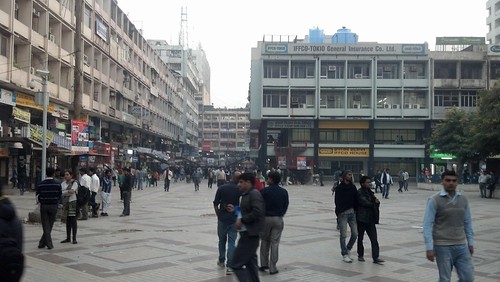
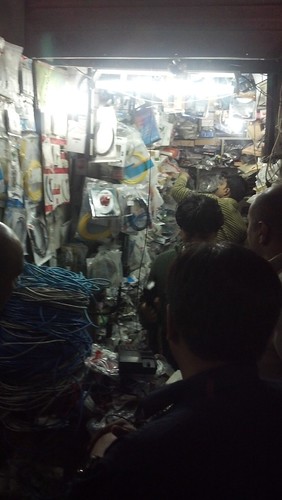
All of this can just drive you crazy trying to take it all in. I stopped taking pictures very early in my trip, choosing to just absorb a lot and get a few pictures in here and there. I think that was a pretty smart choice.
I’m really thankful I got the chance to go to India. I’m already trying to line up a return trip or two. I can’t wait to get back and see new old friends and new old sights.
Subscribe (RSS)

The Leadership Journey


